
Aspen
Two trades under one roof, finally on one daily ledger.
The shop runs a money changer and a gold counter side by side. Aspen keeps them on the same daily sheet. Lucid, the assistant we built in, logs the transactions and reads the books back to you.
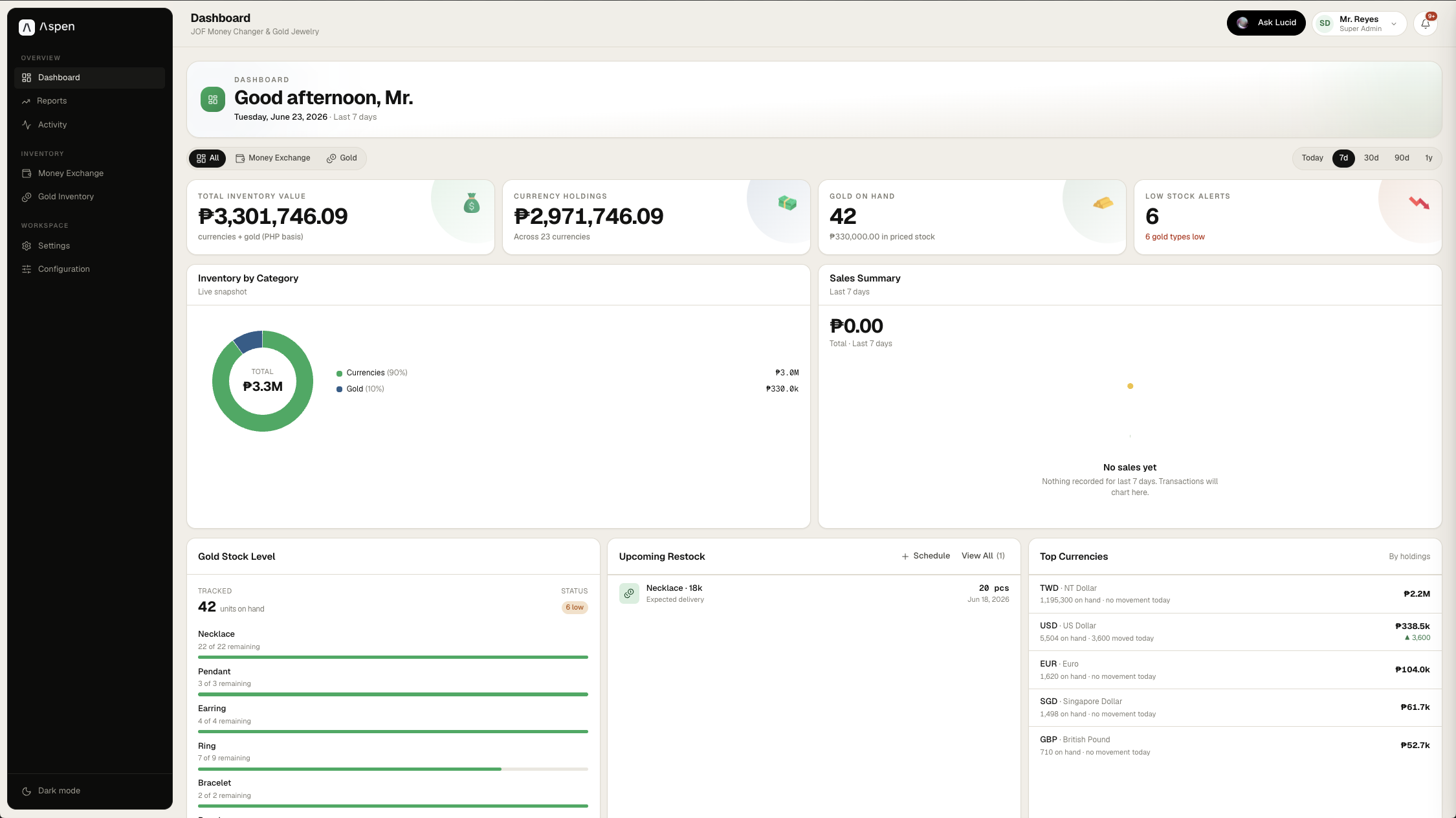
The dashboard. The whole shop on one screen, the moment it opens.
Two businesses, one drawer.
Under one roof the shop runs two trades: a money changer handling foreign cash, and a gold counter moving necklaces, rings and bars. For years both lived in notebooks, totted up by hand and reconciled from memory at closing.
Aspen follows the routine the staff already know: open the day, log what comes in and goes out, reconcile, sign off. What changed is that the math is automatic, the record is permanent and tied to a name, and Lucid can record a sale or answer a question the moment you ask.
When the books live in your head, the busy day is the one you lose track of.
Reconciling by hand made three things hard: knowing the real value on hand at any moment, spotting a currency running low before it ran out, and producing a close anyone could trust. Two notebooks meant two versions of the truth, and no single view of the business.
Make the daily close quick and impossible to fudge.
One source of truth
Currency and gold on the same daily sheet, with running values. No second notebook, no mental arithmetic.
Reconcile by structure
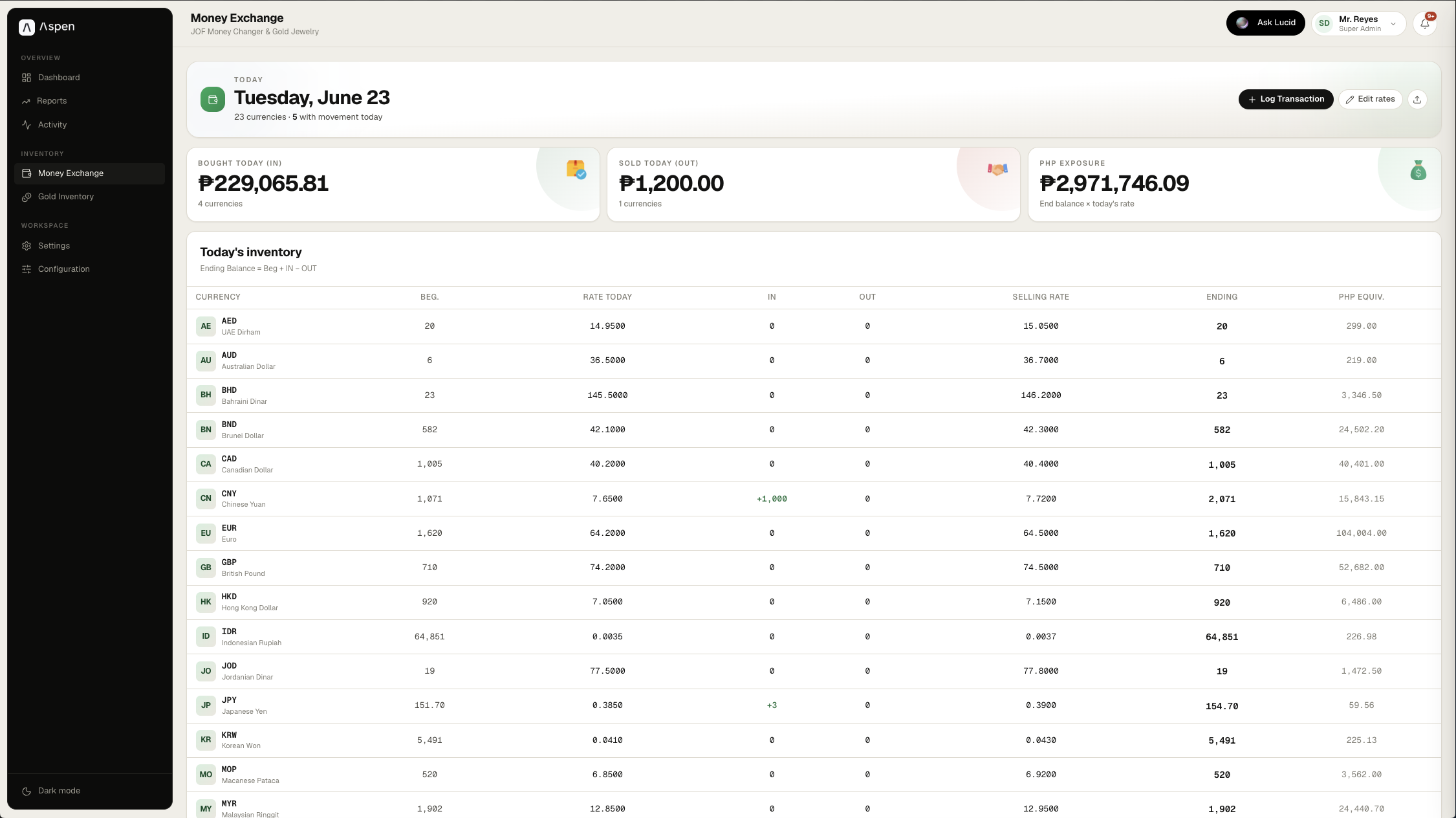
Beginning + In − Out = Ending, computed and checked, then signed off by a named person.
An assistant that acts
Lucid doesn't just read the books. It records the sale, drafts the report, and flags what's running low.
The ledger, made live
A money changer's day is one equation, repeated for every currency. Aspen makes that the layout: opening stock, today's rate, what was bought, what was sold, and the ending balance, with each line carrying its peso value as you go.
Counted, signed, locked
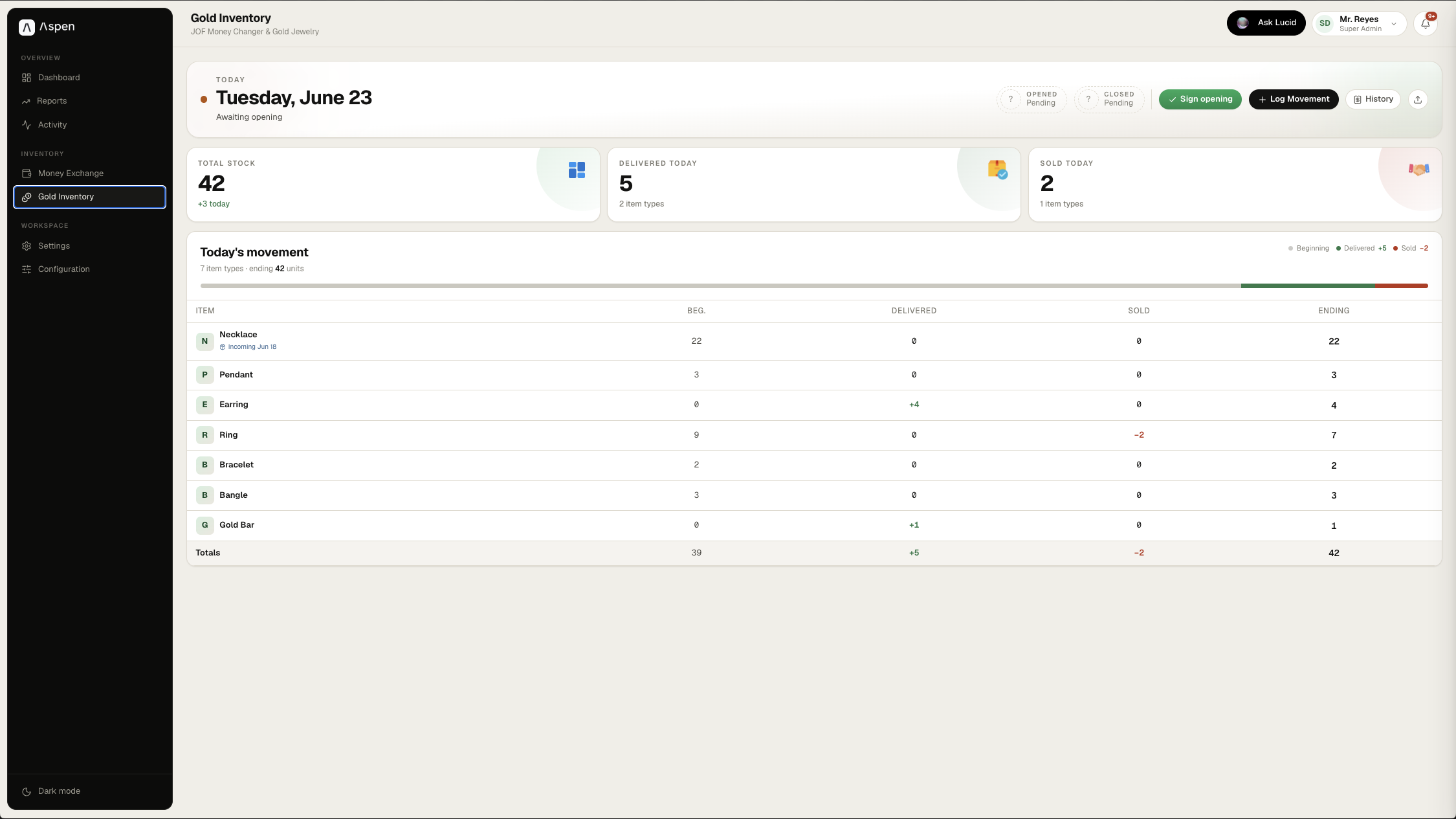
Gold runs on the same rhythm, counted in pieces instead of denominations. Every item type moves through beginning, delivered, sold and ending, and the day is opened and closed by a named staff member, so the record is always attributable.
It does the work, not just the reading
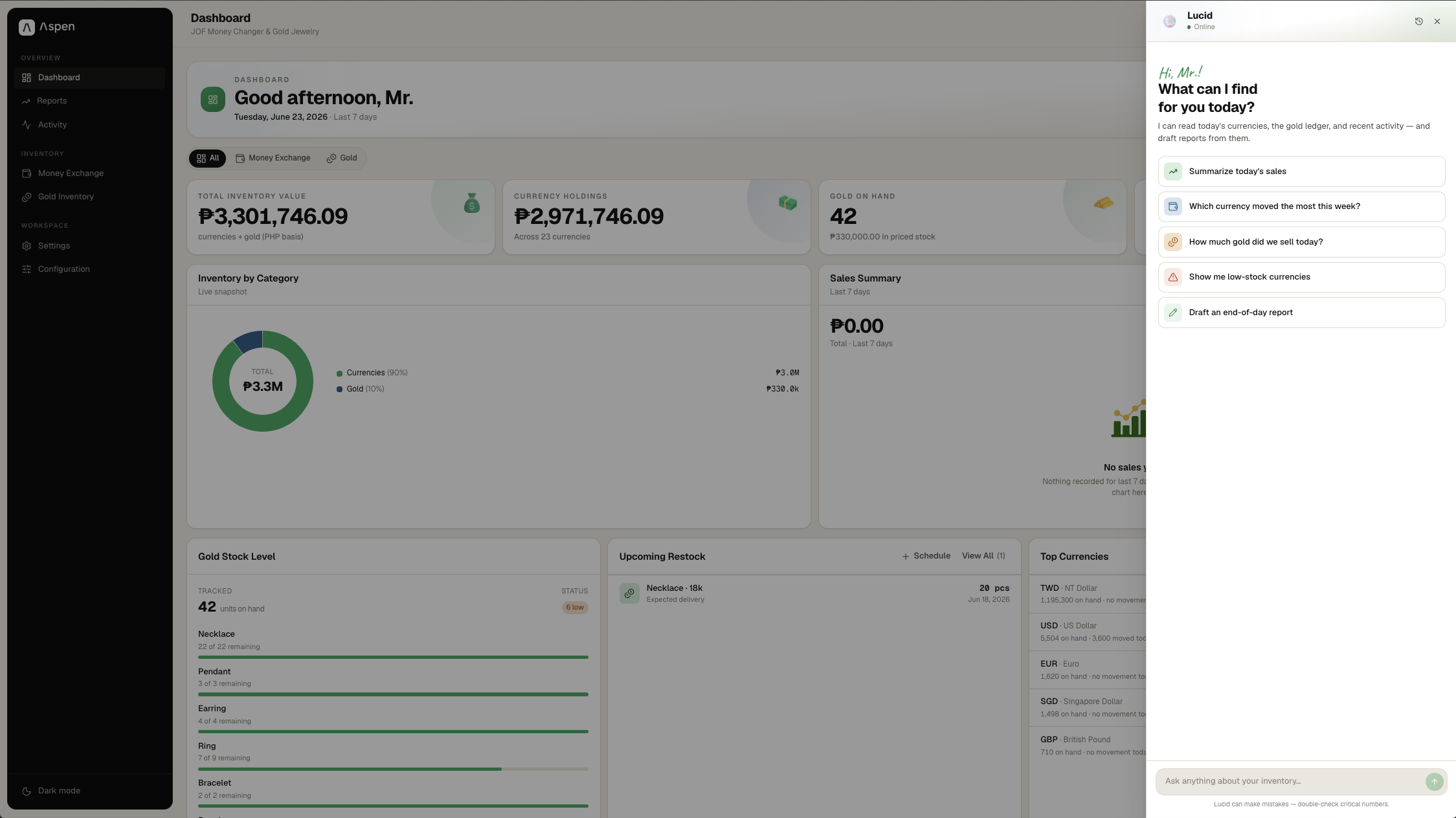
Lucid sits beside the ledger, not in a separate tab. Tell it "I sold 500 USD today" and it drafts the transaction, rate and peso value worked out, ready for you to confirm. Ask how the week went and it reads the books back to you.
It drafts. You decide.
Lucid is built into the ledger, not bolted on the side. It opens with the questions an owner actually asks at close, and can take a spoken instruction all the way to a saved transaction.
Trust was the brief, not a footnote. Lucid drafts; you confirm. Anything that changes a number comes as a card to approve.
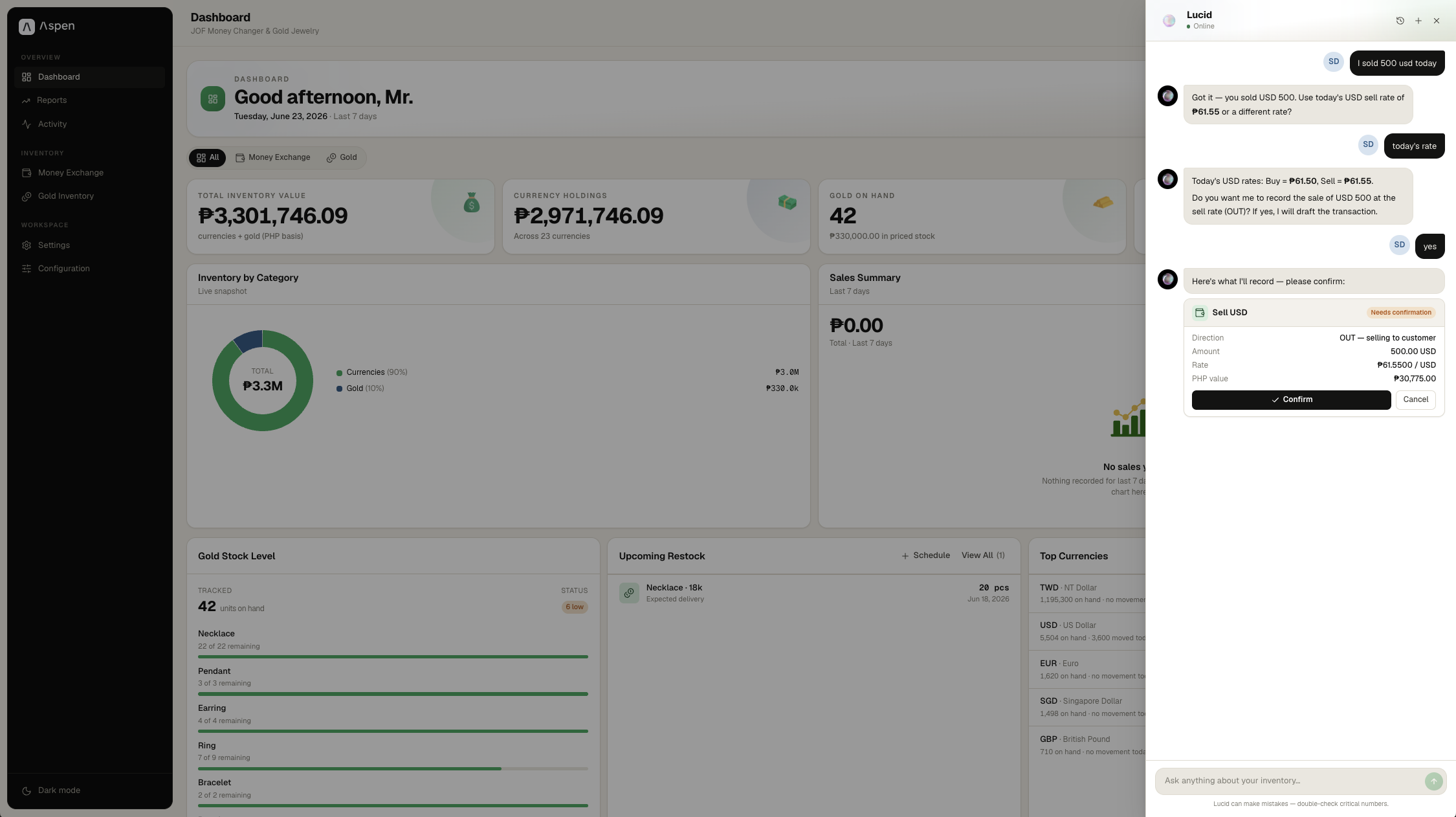
A spoken instruction becomes a transaction card. Nothing saves without your confirm.
From two notebooks to one trusted close.
Aspen gives the shop one live view of what's on hand, a reconciliation that can't quietly drift, and a close that's tied to a name. The same daily ritual the staff always had. Just faster, and provable.